
Educating Parents on HGH For Adolescents
As parents, we all want the best for our kids: healthy, strong, and self-assured. However, a child’s growth pattern may not always match their genetic potential, even when everything appears to be normal. Families may wonder if their child is growing at the proper rate as a result of this.
Contemporary pediatric endocrinology provides safe and effective methods for monitoring growth and, when needed, guiding it through specialized therapies like growth hormone treatment. HGH Vallarta clients have access to advanced options, overseen by highly skilled specialists, that use the latest treatments and medications.
An actual case involving a 14-year-old patient named “Patrick A.” serves to clarify how this therapy operates, the importance of close observation, and what parents can anticipate.
Growth Hormone Therapy: What is It?
Somatropin, a synthetic form of the hormone our bodies naturally produce, is used in growth hormone therapy. It aids in regulating:
- Growth in height and bone
- Development of muscles
- The metabolism of fat
- Energy balance
Doctors typically prescribe somatropin for children or teens whose growth is slower than expected due to hormone deficiencies or other conditions. However, the dose must be carefully tailored to the patient’s age, weight, and response.
In Patrick A.’s case, his original dose of 2.0 mg was working, but doctors identified that it was slightly below what his body required for optimal progress. The recommended adjustment to 2.6 mg daily is a small but vital step to help him stay on track toward his genetic height potential.

How Doctors Monitor Progress
Growth hormone therapy is not just about getting taller. Pediatric endocrinologists monitor multiple factors to ensure safety and effectiveness:
Key Measurements in Patrick’s Case:
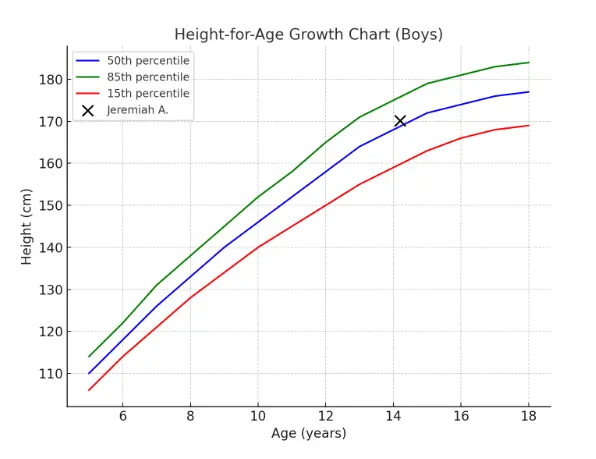
- Height: 170.2 cm (72nd percentile)
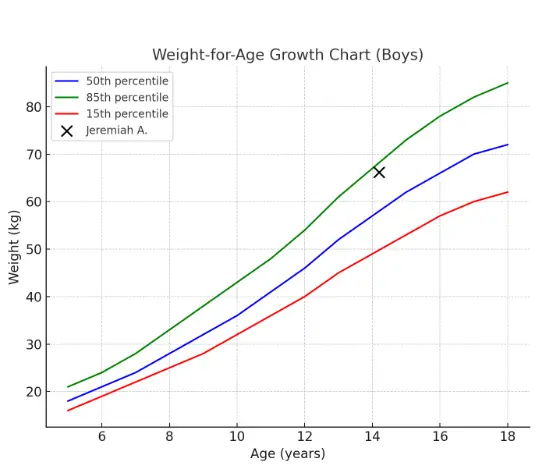
- Weight: 66.2 kg (88th percentile)
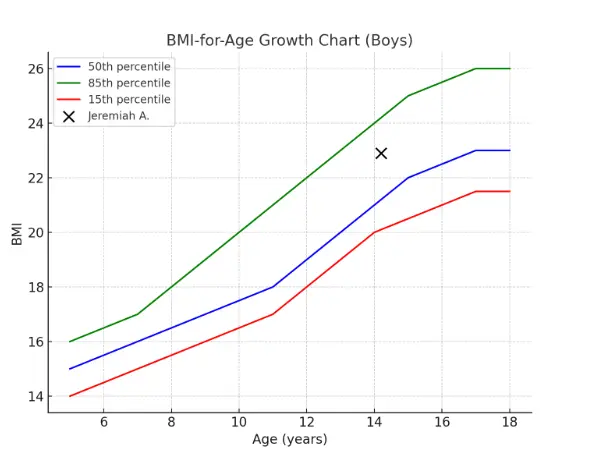
- BMI: 22.9 (85th percentile)
- Growth Velocity: 8.9 cm/year (healthy rate)
- Bone Age: 14 years (matches chronological age)
Height Progress Example
Below, you can see Patrick A.’s height plotted on a standard growth chart compared to peers his age:
Weight and BMI Monitoring
Tracking weight and BMI helps ensure the therapy isn’t just improving height, but supporting balanced growth overall.
Safety, Adjustments, and Parental Support
One of the most critical parts of hormone therapy is continuous adjustment. Children proliferate, and what works today may not be the correct dose six months later. In Patrick A.’s case, all his lab results were within normal ranges, which reassures both doctors and parents that therapy is safe to continue.
Recommended Next Steps for His Care:
- Increase the somatropin dose to 2.6 mg daily.
- Recheck labs (blood chemistry, HbA1c, thyroid, IGF-1) every 3 months.
- Repeat bone age X-ray once per year.
- Support treatment adherence at home with nightly injections and follow-up visits.
Parents play a vital role in this process. Consistent medication administration, appointment tracking, and questioning during follow-up visits are crucial for long-term success.
Why Early Action Matters
When medical professionals address growth concerns early, children and teens have the best chance of reaching their full genetic height potential. Growth concerns are not only about appearance; they also support healthy metabolism, bone density, and long-term well-being.
Families traveling to Mexico with HGH Vallarta benefit from access to specialized care that combines cutting-edge medications with expert medical supervision. When properly managed, growth hormone therapy is a safe and effective way to help children build a healthier future.
Bibliography
- DiVall, S. A., and Grimberg, A. (2016). Guidelines for growth hormone and insulin-like growth factor-I treatment in children and adolescents. Hormone Research in Paediatrics, 86(6), 361–397. https://doi.org/10.1159/000452150
- Wit, J. M., & Kamp, G. A. (2021). Growth hormone therapy in children: Critical issues of efficacy and safety. Endocrine Development, 38, 1–15. https://doi.org/10.1159/000512437
- Cohen, L. E. (2020). Growth hormone therapy in pediatrics—20 years of KIGS experience. Frontiers in Endocrinology, 11, 596. https://doi.org/10.3389/fendo.2020.00596
- National Institutes of Health (NIH). (2023). Human Growth Hormone: MedlinePlus. https://medlineplus.gov/humangrowthhormone.html

Go on to the Next Action
If you are concerned about your child’s development, don’t wait. Early evaluation by a pediatric endocrinology team can make all the difference.
Contact HGH Vallarta today to schedule a consultation. Our expert team is here to guide your family with safe, personalized, and effective treatment options.