While most people associate human growth hormone (HGH) with building muscle or enhancing athletic performance, its unique and intriguing role in a clinical, medically supervised setting is often overlooked. HGH’s most promising and lesser-known function is in weight management, not just weight loss, a fact that may surprise and inform many.
Weight management and weight loss are distinct yet essential concepts. People usually think of weight loss as simply reducing the number on the scale. However, proper weight management encompasses body composition, metabolism, fat distribution, muscle preservation, and long-term hormonal balance—areas where HGH may offer significant benefits.
In our Puerto Vallarta clinic, we treat patients who are not merely looking to “lose weight” but to enhance their body and regain a healthy, sustainable balance. Here, we outline how HGH can aid in weight control beyond traditional weight loss methods and discuss the current scientific evidence supporting this approach.
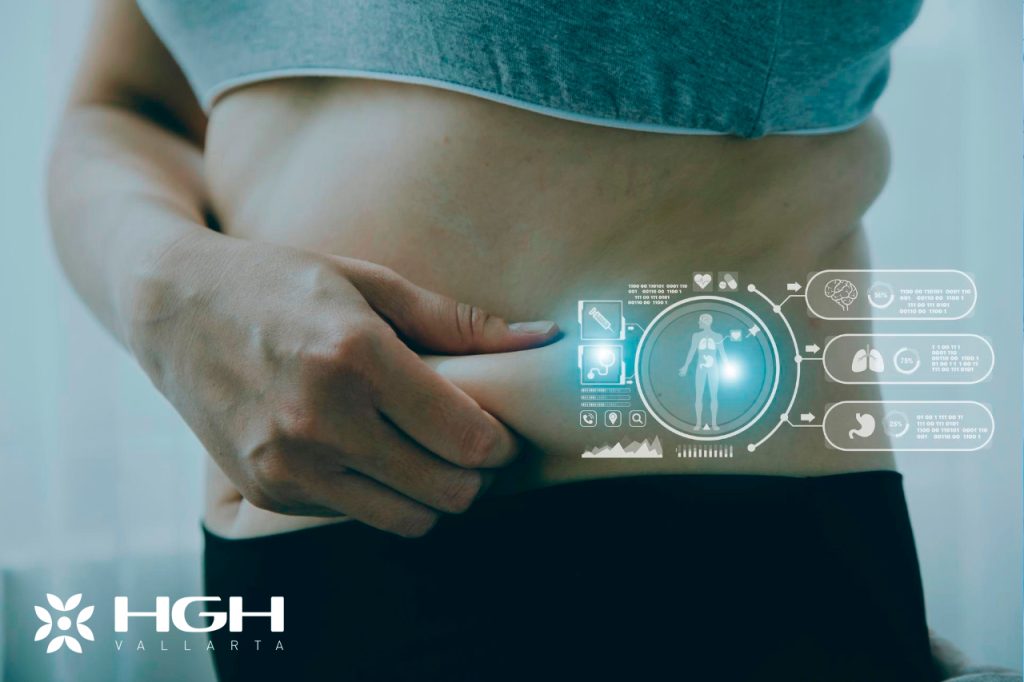
What Is HGH, and Why Is It Important?
The pituitary gland produces human growth hormone (somatotropin) and is responsible for:
- Controlling body composition
- Aiding in the growth and repair of muscle
- Mobilizing fat for use as energy
- Stimulating cell regeneration
HGH levels typically decline with age, usually starting in the early 30s. This decline can lead to excessive abdominal fat, reduced lean body mass, and a sluggish metabolism, particularly in adults over 40 years old.
In individuals with adult growth hormone deficiency (AGHD), a condition that may go undiagnosed, HGH supplementation has been shown to reset metabolism and increase fat utilization, often with minimal changes in diet or exercise. The potential of HGH therapy to reset metabolism offers hope and optimism to those struggling with weight management, a promising prospect that can uplift and inspire.
Metabolism and Fat Mobilization
Medical professionals believe that one of the unique ways HGH controls weight is by stimulating lipolysis, the breakdown of fat into fatty acids and glycerol, which the body uses as fuel.
A controlled study published in The Journal of Clinical Endocrinology & Metabolism found that HGH therapy effectively reduced fat mass, particularly visceral fat, which is metabolically active and associated with a higher risk of diabetes, heart disease, and insulin resistance.
Muscle Preservation and Lean Body Mass
Most conventional methods of weight loss, especially crash diets, result in the body losing both muscle and fat. This loss of muscle and fat has the negative consequence of further reducing metabolism, as muscle is a metabolically active tissue; when it is lost, metabolism becomes even slower.
HGH, on the other hand, has been found to preserve and even increase lean muscle mass during weight loss. This effect was especially noticeable in subjects with low baseline growth hormone levels in clinical tests or those who were older.
HGH encourages optimal weight control, which enhances body composition rather than total weight by preserving muscle and boosting fat metabolism.
Blood Sugar Regulation and Insulin Sensitivity
Maintaining a healthy weight involves more than just counting calories; it also depends on insulin function and hormonal balance. HGH interacts with insulin-like growth factor 1 (IGF-1), which influences glucose metabolism. The impact is not straightforward: acute HGH treatment can acutely lower insulin sensitivity, but more chronic administration (especially under medical supervision) can increase insulin action.
People who have prediabetes, insulin resistance, or “obstinate weight” that may be hormone-related should be interested in this.
Hormonal Reset and Weight Plateau Management
Most patients who have been on numerous weight-loss programs eventually experience a plateau, a period during which improvement stops despite continued effort. Such a plateau is also sometimes caused by hormonal deficiency, specifically a decline in growth hormone levels, which affects energy, recovery, and fatty acid oxidation, allowing some individuals to regain their ability to lose fat or continue to lose weight without making drastic dietary changes or increasing training intensity. Such a discovery suggests that HGH plays a regulatory role in inducing long-term energy balance.
Reasonable Expectations and HGH Safety Precautions
Patients should remember that HGH is not a ‘miracle fat burner.’ It should always be considered a component of healthy lifestyle practices, including a proper diet, regular exercise, and sufficient sleep. As part of this general regimen of weight control, particularly in the instance of those suffering from hormone-induced metabolic aging, HGH can be a useful ancillary adjunct.
Doctors should always supervise the administration of HGH therapy following adequate testing (e.g., IGF-1 levels and pituitary function). It is a risk-free procedure with measurable effects, if physicians do it correctly, which should be reassuring to potential patients.

Final Comments: Weight Control, Not Weight Loss
A weight figure is not the same as weight control, long-term maintenance, endocrine status, energy metabolism, and bodily structure.
To help you achieve your physical and health goals safely and effectively, HGH Vallarta employs a comprehensive approach. To help our patients feel at ease and confident, we integrate thorough hormone testing, cutting-edge therapies, and patient-centered care.
HGH therapy may serve as a bridge, provided it is administered correctly, especially if you have reached a plateau in your progress or if your metabolism is not functioning as it once did.
Take the first step toward a healthier, more confident you. Contact HGH Vallarta today to learn more and start your transformation!